Contact
  Locations
 .png) Call
Call 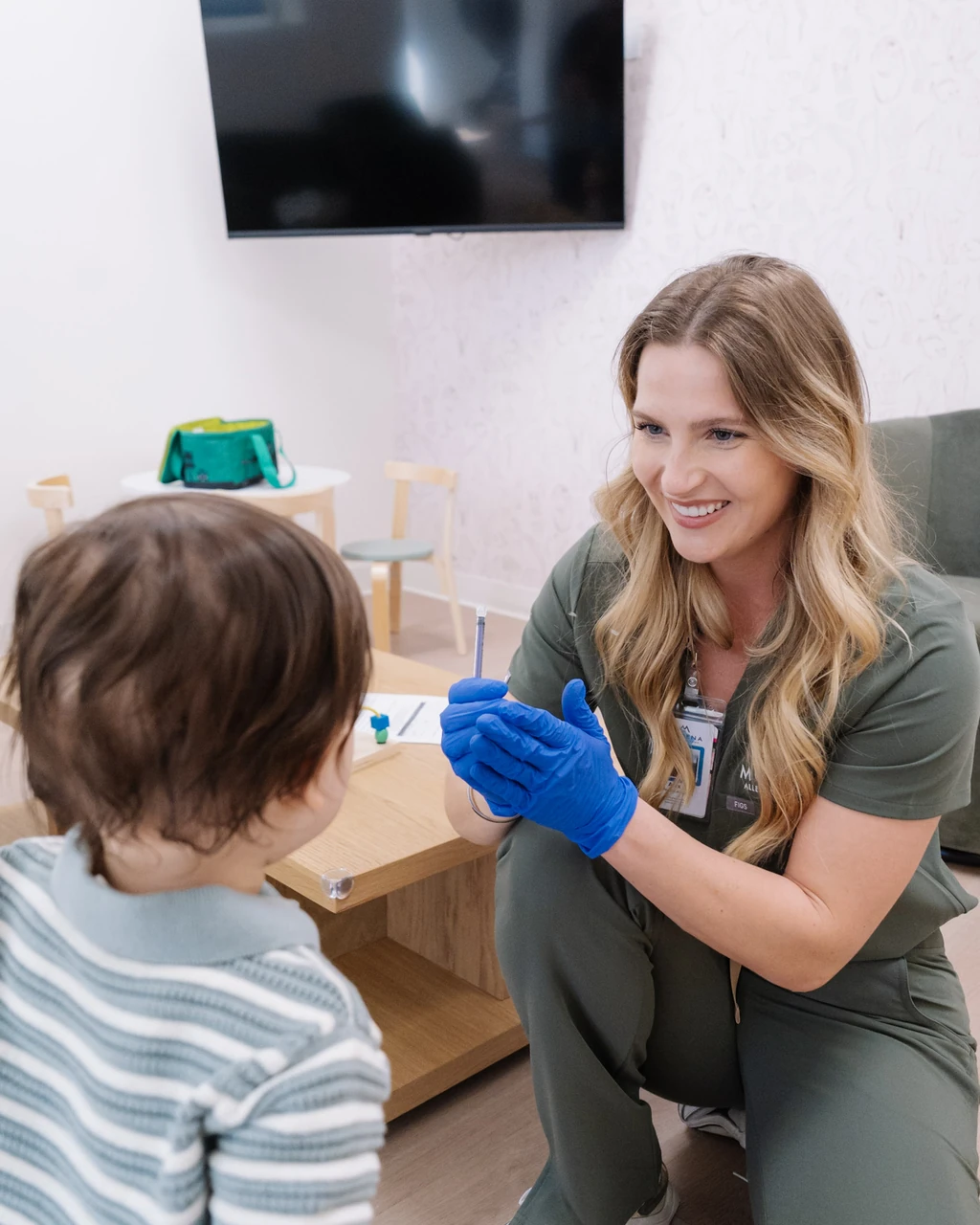
Testing and Allergy Questions
When to See a Child Allergist: Questions for Parents
A child allergist can help when reactions are recurrent, frightening, hard to identify, or not improving with a basic plan. You do not need to arrive knowing which test to request. The best starting point is the story: what happened, how quickly, how often, and what a clear answer would change for your child.
Reasons a visit may help
| Situation | Useful question for the specialist |
|---|---|
| Hives, vomiting, wheeze, or swelling after a specific food | Is this an immediate food allergy, and what is the emergency plan? |
| Repeated nasal or eye symptoms affecting sleep or school | Which exposures fit, and is targeted testing useful? |
| Recurrent wheeze or cough | Does the child need an asthma evaluation and action plan? |
| Eczema or rash after products | Is this irritation, eczema, or delayed contact allergy? |
A positive test without a matching history can label a child allergic to something they tolerate. An allergist chooses tests after reviewing symptoms and age; AAAAI notes that allergy testing can be performed in children when indicated. The goal is a decision, such as what to avoid, whether a food can be reintroduced under supervision, or which treatment to use.
Prepare for the appointment
Bring photos of rashes, food or product labels, medication names, a timeline of symptoms, and notes from urgent care or school. Record whether the child eats a suspected food normally. Ask the clinic ahead of time whether an antihistamine should be held before skin testing; never stop a prescribed medicine without guidance. For a food concern, ask for a written plan that school and caregivers can follow, including when to use epinephrine if it is prescribed. Practice with a trainer device and check where emergency medicine will be stored. For asthma, ask who updates the action plan and how to recognize worsening breathing.
Know what cannot wait
Trouble breathing, throat symptoms, faintness, or rapidly worsening symptoms after a suspected exposure need emergency care. An office consultation is for evaluation and long-term planning after the child is safe. Recurrent symptoms without an emergency also deserve attention if they limit food choices, sleep, sports, or school.
Is my child too young for testing?
Age alone is not a reason to skip evaluation. The specialist decides which test, if any, is useful and safe for the child's specific history.
Should I request a large food panel?
Usually no. It increases the chance of irrelevant positive results and unnecessary food avoidance. Start with the foods and reactions that actually occurred.
How to make the visit less stressful for a child
Explain in age-appropriate language that the doctor is trying to understand what happened, not testing whether the child was “careful enough.” Bring a familiar item and ask the clinic what procedures may occur so you can prepare. If a food reaction happened at school, request the written account, package, and treatments given. Ask the clinician to write instructions that caregivers can recognize and act on. If the child has many foods restricted after broad testing but eats some of them without trouble, say that clearly; it may change the plan. A useful specialist visit should leave the family with fewer unanswered safety questions and an explicit follow-up step.
Sources
- AAAAI: Allergy testing
- AAAAI: Food allergy stages and action plans